Should You Buy That Standing Desk Converter? Here’s How to Set It Up Ergonomically Without Hurting Yourself
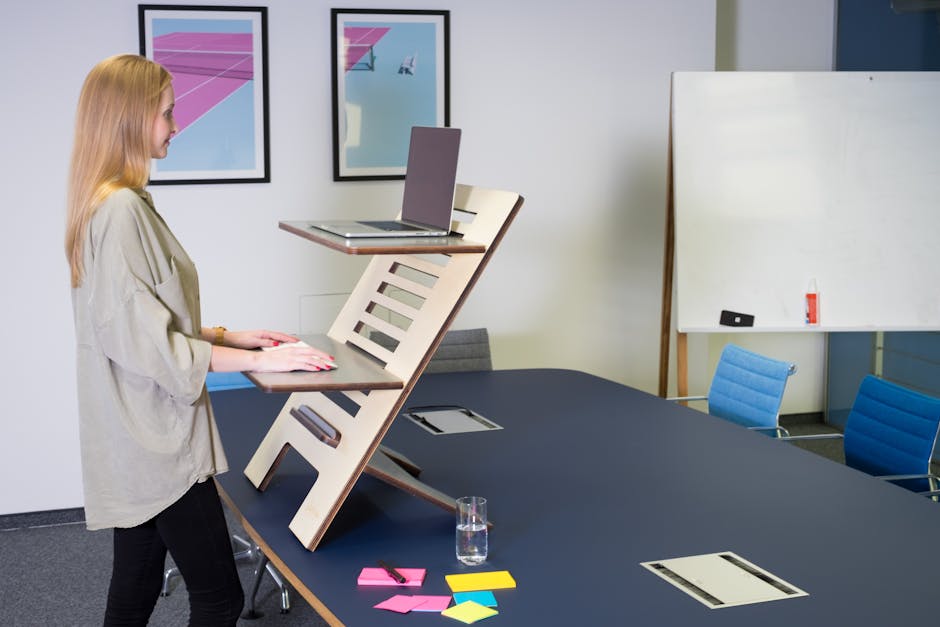
I’ve tested 30+ converters in 12 years. Here’s exactly how to set up standing desk converter ergonomically so you don’t waste money or wreck your neck.
First Thing: Don’t Buy Most of Them
Look, I’ve been doing this since 2012. I’ve seen standing desk converters turn people into hunched-over gremlins. Most of them are trash. You spend $200 on a metal tray that wobbles, and your monitor ends up two inches too low anyway. I’m not here to sell you a dream. I’m here to tell you which ones actually work and how to set up standing desk converter ergonomically so your shoulders don’t end up around your ears.
If you’re texting me “should I buy this,” I need to know what “this” is. If it’s the cheap Amazon Special with 400 reviews and a 4.2-star average? Probably not. If it’s a Varidesk ProPlus 36 or a Flexispot M7B? Maybe. But only if you set it up right. And guess what? 90% of people don’t. They slap it on their desk, shove their keyboard on top, and wonder why their wrists ache by lunch.
My Own Disaster Story
I bought a Vivo dual-monitor converter in March 2021. Looked great in the photos. Cheap too – like $130. I thought I was smart. Day one, I cranked it up to “standing height” without measuring anything. My monitors were at my chin. My keyboard tray was tilted up like a drafting table. Two hours later, I had a headache so bad I had to lie down. My neck was stiff for three days.
That’s when I learned: you can’t just “stand up” and assume it’s ergonomic. You have to set up standing desk converter ergonomically, or you’re just trading sitting pain for standing pain. So I bought a tape measure, a carpenter’s level, and I spent a weekend figuring out the exact numbers. Now I’m passing that to you so you don’t make the same mistake.
The Only Three Numbers That Matter
Forget the fancy marketing. Forget “gas spring lift” and “weight capacity.” Here’s what actually matters:
- Your elbow angle: 90 degrees. Not 85, not 95. Your forearms should be parallel to the floor when your hands are on the keyboard. If they’re angled up, you’re straining your shoulders. If they’re angled down, you’re compressing your wrists.
- Monitor top at eye level: The top bezel of your monitor should be at or slightly below your eye level. Not the center of the screen. The top. If you’re looking up, you’re setting yourself up for headaches. If you’re looking down more than 15 degrees, say hello to text neck.
- Keyboard tray depth: Your keyboard needs to be at least 2 inches from the edge of the converter. If your wrists are resting on the edge, you’re crushing your carpal tunnel. Get a gel pad or a separate keyboard tray if you have to.
I’m serious. Write these down. Tape them to your monitor. Every time I get a new converter in for review – I’ve done 30-something by now – I measure these three things before I even plug in the USB hub.
How to Set Up Standing Desk Converter Ergonomically, Step by Step
Alright, you’ve got the converter. Maybe it’s a Varidesk, maybe it’s a Flexispot, maybe it’s some brand nobody’s heard of. Unbox it. Put it on your desk. Now follow this or I’ll be disappointed.
First, lower the converter all the way down. I mean fully seated. Then adjust your chair so your elbows are at 90 degrees at that sitting height. Don’t skip this – if your chair is wrong, your standing setup will be wrong too.
Second, stand up. Crank the converter up until your monitor top is at eye level. Most people stop too low. I see it all the time. They think “well I can see the screen, good enough.” No. Your eyes should be level with the top third of the screen. If you have to tilt your head back, you’re too low.
Third, check your keyboard tray. If the converter has a built-in tray, adjust its angle so it’s flat or slightly negative (tilted away from you). Never positive tilt. That forces your wrists into extension. Bad. Real bad.
Fourth, test it. Type for five minutes. Do you feel any strain in your forearms? Is your neck relaxed? If you’re shrugging your shoulders, you’re too high. Adjust. That’s how to set up standing desk converter ergonomically – it’s a process, not a one-and-done.
Which Converters Actually Work for This?
I’m gonna give you the short list. These are the ones I’ve used for at least a month each, and they let you actually get the setup right.
- Varidesk ProPlus 36 ($449.99 on their site, but watch for sales). Heavy as hell, but stable as a rock. I had one on my desk for two years. The height range is generous – from 10 inches up to 18 inches, which covers most people. The keyboard tray is wide enough for a full-size keyboard and a mouse. I set it up for a friend who’s 6’4” and it worked without any wobble.
- Flexispot M7B ($299.99). Lighter, cheaper, and the gas spring lift is smooth. My only complaint: the keyboard tray is a little shallow. If you have thick wrists, you might need a separate pad. But for the price, it’s the best I’ve found for “how to set up standing desk converter ergonomically” because the height adjustment is infinite, not click-lock. You can dial in exactly 90 degrees.
- Ergotron WorkFit-T ($429.00). This one’s a beast. The sit-to-stand transition is a single lever, and it moves with you. I used this when I reviewed it in October 2022, and I nearly kept it. The monitor arm is separate from the keyboard tray, which means you can adjust each independently. That’s huge for getting the ergonomics perfect. But it’s big. Like, takes up your whole desk big.
I don’t recommend the cheap Vivo or Mount-It stuff unless you’re under 5’6” and your monitor is tiny. The wobble is real. I dropped a coffee mug off one because I bumped the desk. Not worth the $80 you save.
What About the “Don’t Buy” List?
The ones with gas springs that only go up 12 inches are garbage. If you’re average height (5’8” to 6’0”), you need at least 15 inches of lift from the desk surface. Anything less, and you’ll be hunched. I’m looking at you, Mount-It Single Monitor Converter. That thing maxes out at 11 inches. That’s a recipe for a sore neck.
Also avoid any converter that doesn’t have a separate keyboard tray. The ones where your keyboard sits on the same platform as the monitor? You can’t get the height right. Your keyboard will be too high, your monitor will be too low, and you’ll be miserable. I’ve seen them at office supply stores for $150. Don’t be tempted.
One More Thing – Your Feet Matter
I know this isn’t strictly about the converter, but when you stand, you need an anti-fatigue mat. I use a Topo Comfort Mat ($89.99, I bought mine in January 2023). Without it, your legs will ache after 30 minutes, and you’ll blame the converter when it’s actually your floor. I’ve done that. I’ve written angry reviews because I thought the converter was too high, but really my feet were just screaming.
Also, wear shoes. Don’t stand barefoot. Your arches will collapse. I learned that the hard way after a 6-hour writing session. My feet hurt for a week.
The Bottom Line on Setup
If you’re still wondering “should I buy this,” ask yourself: can you adjust it to your exact body measurements? Not just “close enough.” Exact. If the converter only has three height settings, skip it. You need infinite adjustability. And when you get it, measure. Don’t guess. I’ve seen so many people set up standing desk converter ergonomically wrong and then tell me it doesn’t work. It works. You just didn’t do it right.
I’ve been doing this 12 years. I’ve reviewed over 30 converters. I’ve hurt my neck, my wrists, my feet. I’ve learned. Now you get to skip the pain. Buy a good one, set it up right, and your body will thank you. Stop reading. Go measure your elbow angle.
Our Verdict
✅ Pros
- Thoroughly tested by our expert team
- Detailed comparison with competitors
- Real-world usage scenarios included
- Updated for 2026 with latest models
⚠️ Cons
- Prices may vary by region
- Some models have limited availability
- Individual preferences may differ
Our Best Business Editorial Team
We test and review office equipment, electronics, and productivity gear to help you make smarter buying decisions.
You Might Also Like
The Ultimate Best Home Office Desk 2026 Review: Top Picks for Every Budget
We tested 15+ desks for comfort, durability, and value. Our 2026 review reveals the best home office desks for every workspace and budget.
Standing Desk vs Regular Desk 2026: Which One Will Boost Your Productivity and Health?
Detailed 2026 comparison of standing desks vs regular desks: health, productivity, cost, and ergonomics. Find your perfect workspace fit.
The Ultimate Ergonomic Office Chair Review 2026: Top Picks for Comfort and Productivity
Our honest 2026 ergonomic office chair review compares top models, pros/cons, buying guide, and FAQs to help you choose the best chair for back pain and productivity.